
Digital Twin & Simulation Engineering
Model the operation before you commit the capital.
Alsadaany Industries builds operational intelligence systems for physical industries. We turn a factory, a warehouse or a terminal into a working model of how it actually behaves, then run the decision against that model before it reaches the floor.
- Manufacturing
- Logistics
- Aviation
- Robotics
- Critical systems
Trust Alsadaany. Trust the Quality.
The problem
Physical systems are expensive to change after they are built
A production line, a warehouse or a terminal is committed in concrete, steel and contracts. Once it is running, the cost of finding out that a layout, a staffing pattern or a control policy was wrong is measured in lost output and in capital that has already been spent.
So the decisions get made on estimates, on experience, and on the parts of the system that happen to be instrumented. That works until the operation is complex enough that its behaviour stops being intuitive, which for most industrial systems is well before anyone notices.
The constraint is rarely where the reporting says it is
Utilisation figures describe how busy equipment was, not what limited output. A line can be waiting for material far more than it is waiting for the next stage, and the two have entirely different remedies.
Averages hide the behaviour that costs money
Queueing, contention, blocking and failure interact. A calculation that averages them away produces an answer that is confidently wrong in exactly the situation worth planning for, which is the bad day.
The trial you would need is the one you cannot run
You cannot rearrange a working plant to see what happens, and you cannot close two security lanes during the morning wave to find out what it costs. So the options that would settle the question never get tested.
What we build
Three capabilities, one engineering thesis
Everything this company sells belongs to one of these, and every product and research system hangs underneath them.
How it works
One loop, run continuously
Every engagement runs the same cycle. It starts at the operation and it returns there, which is what separates a twin from a study.
Model
The operation is written down as objects, relationships, states, events and constraints. Machines, buffers, people, orders, materials, shifts and failure modes, with the rules that connect them.
Simulate
The model is run forward under demand, variability and disruption. Runs are seeded and replicated, so a result is a distribution rather than one sample.
Optimize
Candidate changes are generated and evaluated against the same model: buffer sizes, staffing, sequencing, routing, maintenance windows.
Decide
Options are compared on the measures the operation is actually judged by, with the assumptions behind each figure attached to it.
Deploy
The chosen change goes into the physical operation, or into the control logic of the systems that run it.
Measure
Operational data comes back. The model's prediction is compared against what the plant did, and the difference is the finding.
Learn
The model is corrected against the deviation. Each cycle the twin is a closer description of the operation than it was.
Learn returns to Model. Each pass makes the twin a closer description of the operation than it was, which is the only mechanism by which a model stays worth trusting after the study that produced it.
The platform
Alsadaany Industrial Twin
Alsadaany Industrial Twin holds a physical operation as a structured model of objects, relationships, states, events and constraints, runs that model forward under demand and disruption, and uses it to compare interventions before any of them reach the plant.
The value is the operational model and what can be computed over it. Three-dimensional visualisation is an interface onto that model. A system whose twin exists only as geometry can show you the plant; it cannot tell you what the plant will do.
What the model holds
- Objects
- Machines, cells, buffers, conveyors, vehicles, robots, operators, tools, materials, orders, containers, storage locations, stands, gates.
- Relationships
- Routes between stages, feeds, precedence, containment, assignment of an operator to a machine, network adjacency, physical proximity.
- States
- Idle, processing, blocked, starved, breakdown, maintenance, charging, in transit, queued, held.
- Events
- Job release, stage completion, failure, repair, shift change, arrival, departure, replenishment, alarm, disruption.
- Constraints
- Capacity, work-in-progress limits, shift patterns, skill requirements, safety interlocks, changeover rules, due dates, energy limits.
- Actions
- Add or reassign capacity, resize a buffer, change a sequence, reroute, reschedule maintenance, adjust staffing, change a dispatch policy.
Industries
Manufacturing first, then the operations that behave like it
The capability is modelling complex physical operations. It transfers between domains because queueing, contention, failure and resource constraint do, and manufacturing is where it is applied first and most.
Evidence
Four systems, published so the engineering can be examined
None of these is a customer deployment, and each says so on its own page. They exist because a company selling operational modelling should be able to show the modelling rather than describe it.
Company architecture
One company, four branches
Alsadaany is organised around the technology rather than around departments. Digital Twin Engineering is what an organisation buys, Urual is what it runs on, the products are what the same architecture has finished, and research is where the next capability comes from.
The company
An engineering company with unusually strong software
Alsadaany Industries is an Egyptian company building operational intelligence systems for physical industries, and delivering them internationally. The work is industrial modelling, and it is shipped as software.
Both halves are load-bearing. The models have to reproduce the mechanisms that decide industrial performance: queueing, contention, variability and failure. And they have to be written as software that can be reviewed, tested, versioned and operated by someone else, because a model that cannot be maintained or re-run is a study rather than a system.
Most simulation work fails on the second half. It produces a correct answer to a question the operation has stopped asking, in a file nobody can open two years later. That is the failure this company is organised around avoiding.
Products
What the stack has shipped
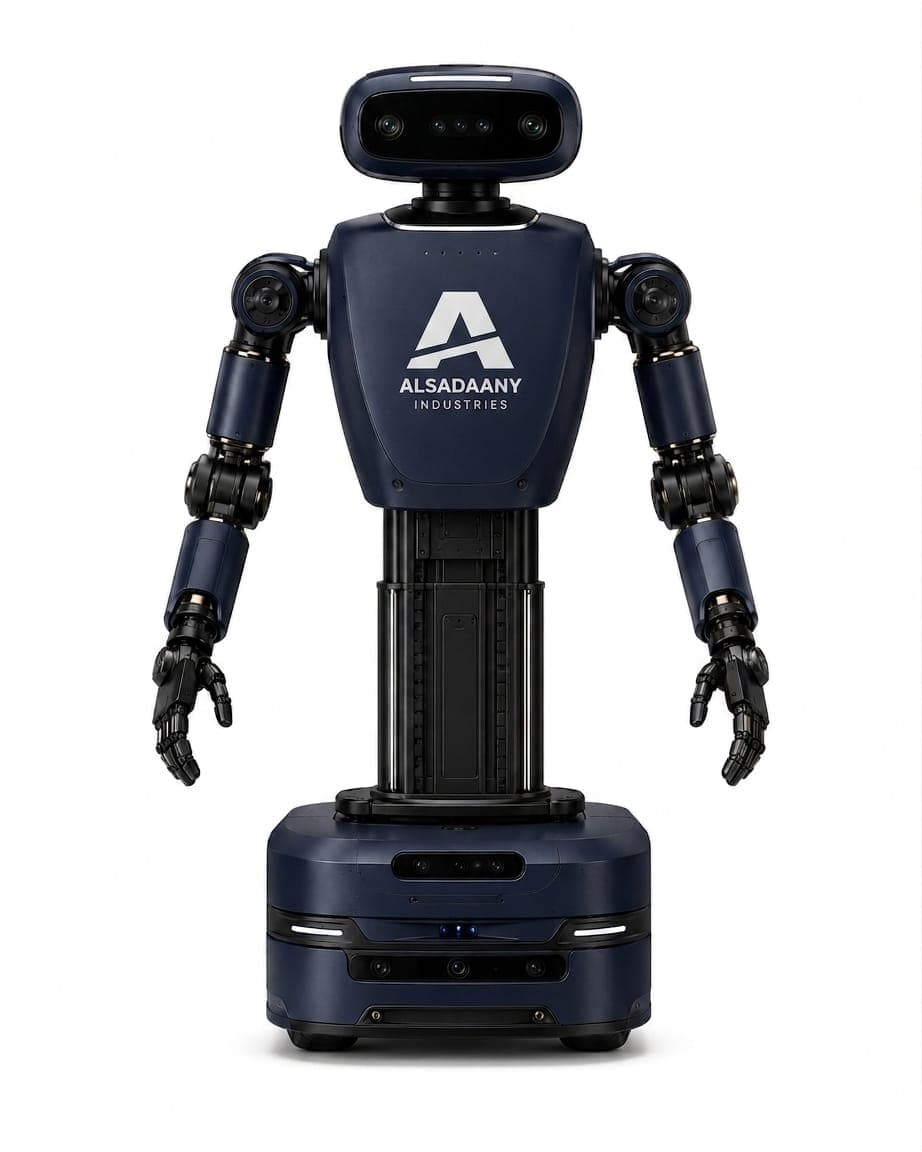
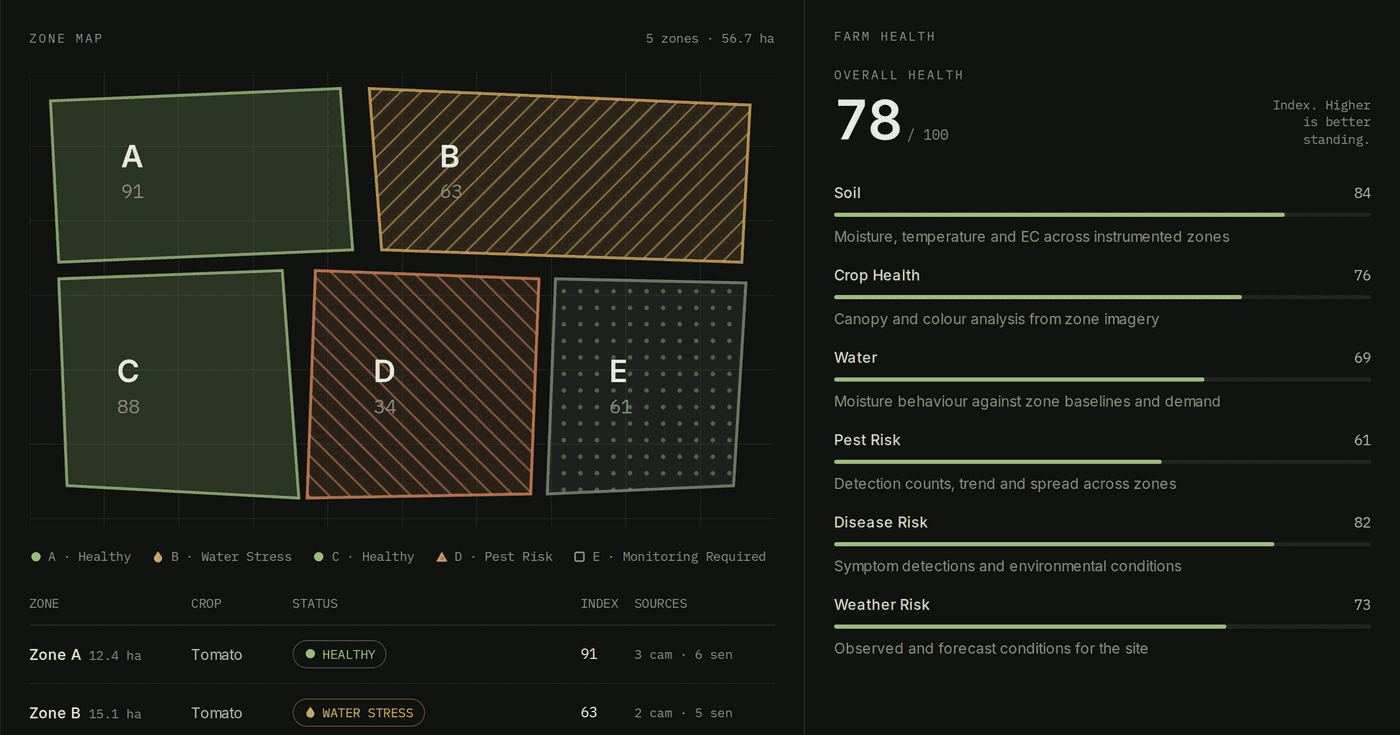
Three products built in-house, each with a site of its own. They are here because a company describing a technology stack should be able to point at what it has finished, and because each one is the same architecture applied at a different end of it.
Commercial model
Discovery, deployment, then an annual agreement
The commitment at each step is proportionate to what is known at that point. Nothing here obliges you to the next stage.
Discovery
A fixed-price assessment that ends in a document you can act on with or without us.
Deployment
A pilot or an operational deployment, fixed price against a scope set in Discovery.
Annual platform agreement
Keeps the deployment current as the operation changes. Priced against the deployment, renewed annually.
Support agreement
A defined support tier alongside the platform agreement, with response commitments written into the contract.
Expansion
Further processes, sites or systems added to a model that already exists rather than built from nothing.
The first step is discovery and system assessment, from $5,000, fixed before it starts. Its output is yours whether or not you proceed.
FAQ
Working with us
What engineering and procurement teams ask before an engagement begins.
How does an engagement begin?
With a Discovery and System Assessment. We map the process, assess what operational data exists and in what state, define the decision the model has to support, and set out the architecture and the scope of a first deployment. It ends in a document you can act on with or without us, including the case for not building a twin at all if that is what the assessment finds.
What data do you need before work starts?
A description of the process and its rules, the layout or network structure, resource capacities and shift patterns, and historical records of demand, cycle times and downtime. Discovery exists partly to establish how much of that actually exists in a usable state, which is rarely what an organisation expects at the outset.
How is a delivered model validated?
It is run against historical periods it was not calibrated on, and its outputs are compared with recorded performance. Results are reported as distributions across multiple replications with the deviation stated, because a single run of a stochastic model is one sample rather than an answer.
Do we need to replace our existing systems?
No. The twin reads from the systems that already hold your operational data and does not become a system of record for any of it. Integration work is scoped per deployment against the systems you actually run.
Can our own engineers run and extend the models?
Yes, and the deployment is built on the assumption that they will. Scenario configuration, inputs and reporting are designed for your team to operate without us. Where the same question recurs, you get a system rather than a report that is out of date the moment operations change.
What happens after a deployment goes live?
A twelve-month warranty covers defects in the delivered work. Beyond that, an annual platform and support agreement keeps the deployment current as your operation changes, at a defined scope and a defined price. Scope changes, new integrations and new functionality are quoted separately.
How are engagements priced?
By stage. Discovery, pilot, operational deployment and enterprise deployment each have a published starting point on the pricing page. A firm price is set after Discovery, once scope, integrations, deployment model and simulation complexity are known.
Where is the company based, and how does it deliver?
Alsadaany Industries is an Egyptian company and delivers internationally. Deployment is on your infrastructure or in your cloud tenancy, and the deployment model is agreed during Discovery rather than assumed.
Contact
Start a project
This is a project brief rather than a contact form. The answers decide whether a useful model can be built at all, so an engineer replies with an initial view of scope, what it would depend on, and how it would be validated. Where the honest answer is that simulation is the wrong instrument, you get that instead.
- Prefer email
- sales@alsadaany.com
- Engineering roles
We use your details only to respond to your enquiry. Nothing sent through this form is used for advertising or shared with a third party.